
Santa Monica Hip Surgeon
Comprehensive Hip Care with Brett Shore, MD
Board-certified orthopedic surgeon Dr. Brett Shore provides comprehensive hip care in Santa Monica, with expertise spanning the full continuum of treatment—from non-surgical care and advanced hip preservation to anterior and bikini incision hip replacement. His approach begins with understanding each patient’s diagnosis, lifestyle, and long-term goals, allowing him to recommend the right treatment at the right time while preserving the natural hip whenever it offers the best path to lasting function.
Now seeing patients in Santa Monica · 2811 Wilshire Blvd #800 · Serving the Westside & coastal communities
Rigorous Training, Exceptional Outcomes

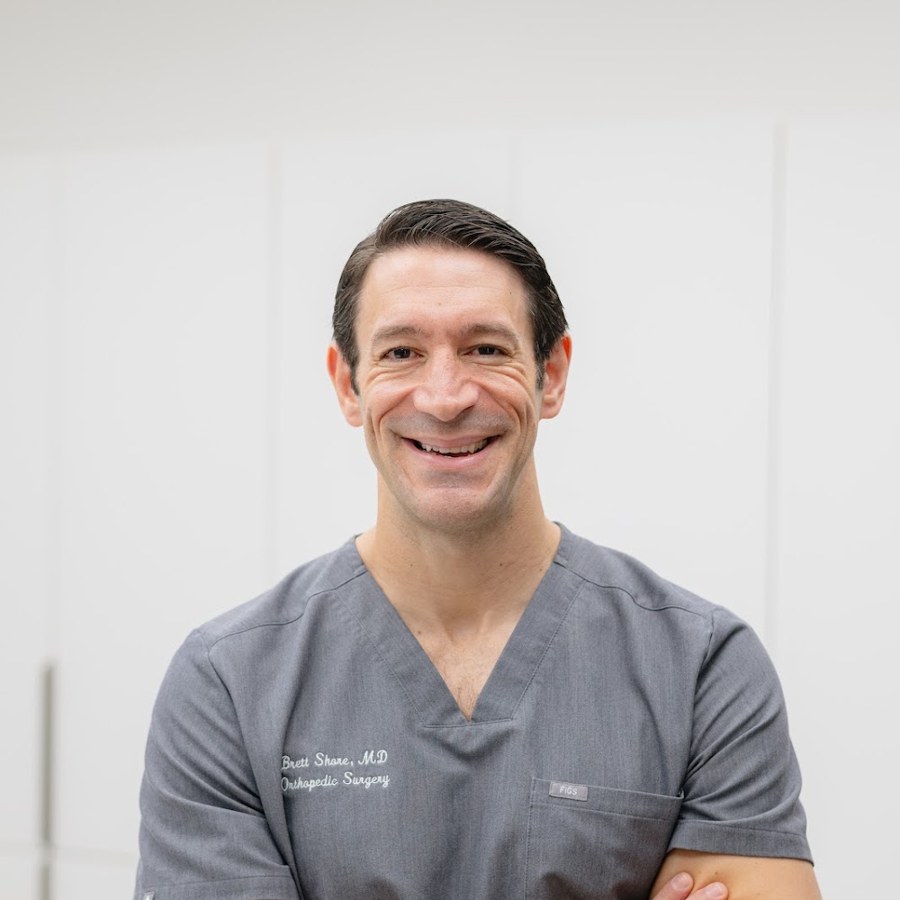
15+ Years of Orthopedic Experience

Former Chief of Hip Preservation at Kaiser Permanente Southern California

Trained at Princeton, Columbia and Harvard

Advanced International Hip Preservation and Hip Replacement Training
A Comprehensive Approach to Hip Care
Every hip condition is different, and the right treatment begins with understanding the source of the problem. Dr. Brett Shore’s expertise spans the full continuum of hip care—from non-surgical treatment and advanced hip preservation to total hip replacement—allowing him to recommend the approach best suited to each patient rather than defaulting to a single procedure.
Treatment decisions are guided by the underlying diagnosis, the health of the joint, the patient’s symptoms, lifestyle, and the activities they hope to return to. When the natural hip can be preserved with the potential for lasting function, preservation may be the best path. When joint damage is too advanced, hip replacement may offer a more predictable and durable solution. The goal is always the same: to choose the treatment that gives each patient the strongest opportunity for long-term function and quality of life.

Hip Conditions Dr. Shore Treats in Santa Monica
Hip pain can result from problems within the joint, structural differences in the hip, arthritis, tendon injuries, or sports-related conditions. Dr. Shore evaluates the source of each patient’s symptoms to determine which diagnosis best explains the problem and which treatment options are appropriate.

Hip Impingement and Labral Conditions

Tendon and Soft-Tissue Conditions

Hip Dysplasia and Instability

Hip-Related Sports Injuries

Arthritis and Joint Damage

Other Structural Abnormalities of the Hip
Hip Treatments Available in Santa Monica
Treatment for hip pain depends on the underlying diagnosis, the condition of the joint, and the patient’s goals. Dr. Shore offers a full range of non-surgical, joint-preserving, and reconstructive options in Santa Monica, with each recommendation tailored to what is most appropriate for the individual.


Anterior Hip Replacement
Anterior total hip replacement may be appropriate when arthritis, avascular necrosis, or other advanced joint damage causes significant pain and loss of function that cannot be addressed effectively with preservation. The procedure replaces the damaged joint through an anterior approach, which allows access to the hip from the front. Dr. Shore considers replacement when it offers a more predictable and durable path to restored mobility than further joint-preserving treatment.


Bikini Incision Hip Replacement
For appropriately selected patients, the bikini incision approach provides an anterior pathway to hip replacement, with the incision positioned along the natural skin crease at the front of the hip. This placement may result in a less conspicuous scar as it heals while maintaining the advantages of an anterior approach.


Endoscopic Piriformis Release and Sciatic Nerve Neurolysis
For selected patients with persistent piriformis-related sciatic nerve compression, Dr. Shore may perform endoscopic piriformis release and sciatic nerve neurolysis. Using a minimally invasive approach, the piriformis muscle is released as needed, and the sciatic nerve is freed from surrounding tissue that may be contributing to compression or irritation. These procedures may be considered when symptoms persist despite appropriate non-surgical treatment.


Non-Surgical and Injection Treatment
Many hip conditions can initially be treated without surgery. Depending on the diagnosis, treatment may include physical therapy, activity modification, medications, corticosteroid injections, platelet-rich plasma, or other conservative measures. Dr. Shore uses non-surgical care both as treatment and, in some cases, as part of the diagnostic process before considering an operation.
Hip Preservation or Hip Replacement?
Some hip problems can be treated while preserving the natural joint. Conditions such as labral tears, femoroacetabular impingement, and hip dysplasia may respond well to hip-preservation procedures when the joint is still healthy enough to benefit. In other cases, advanced arthritis, later-stage avascular necrosis, or substantial cartilage and joint damage may make total hip replacement the more reliable option.
Age alone does not determine which path is best. Dr. Shore considers the diagnosis, severity of joint damage, symptoms, examination findings, imaging, activity level, and the patient’s goals before making a recommendation. The aim is to preserve the natural hip when that approach is likely to provide durable function and to recommend replacement when it offers the better long-term result.
What to Expect During Your Hip Consultation
Your consultation with Dr. Shore is designed to give you a clear understanding of what is causing your symptoms and what you can do about them. Here is what you can expect during your visit.

1. Discuss Your Symptoms
Dr. Shore will ask when your symptoms began, what activities make them better or worse, which treatments you have already tried, and how the problem affects your daily life, work, exercise, or other activities that matter to you.

2. Review Your Imaging
Dr. Shore will review available X-rays, MRI scans, or other imaging and explain what they show in clear, understandable terms. He will also discuss how those findings do—or do not—relate to your symptoms.

3. Discuss Treatment Options
Depending on the diagnosis, options may include physical therapy, activity modification, injections, hip-preservation procedures, or hip replacement. Dr. Shore will explain the appropriate choices and why one approach may make more sense than another.

4. Understand the Next Steps
You should leave the consultation with a clearer understanding of your diagnosis, your treatment options, and what comes next. The goal is to help you make an informed decision with confidence.
When Should You See a Hip Specialist?
You should consider seeing a hip specialist if you experience:
- Persistent hip or groin pain
- Clicking, catching, or locking
- Pain during exercise or sports
- Difficulty walking or climbing stairs
- Reduced hip range of motion
- Limping or changes in gait
- Hip pain that interferes with sleep
- Symptoms that have not improved with non-surgical treatment
- Continued or recurrent pain after previous hip surgery
Why Patients Choose
Dr. Brett Shore
Dr. Shore brings exceptional breadth to hip care. A board-certified orthopedic surgeon treating adolescents and adults, his expertise spans the full continuum of treatment—from non-surgical care and hip arthroscopy to periacetabular osteotomy (PAO), complex hip-preservation procedures, and advanced anterior and bikini incision hip replacement. This comprehensive expertise allows him to evaluate each patient from multiple perspectives and recommend the treatment best suited to the individual, the condition of the joint, and their long-term goals—rather than approaching every hip problem through the lens of a single procedure.
His clinical expertise is grounded in extensive training and leadership in the field. Dr. Shore trained at Princeton University and Columbia University before completing his orthopedic residency at Harvard. He then pursued sports medicine fellowship training with renowned orthopedic surgeon Dr. James Andrews at the American Sports Medicine Institute, followed by advanced international training in both hip preservation and hip replacement in Switzerland. Prior to establishing his practice, Dr. Shore spent 11 years as Chief of Hip Preservation at Kaiser Permanente Southern California.
That depth of experience is matched by a highly personalized approach to care. Dr. Shore takes the time to understand each patient’s diagnosis, lifestyle, and goals, clearly explain the appropriate treatment options, and provide thoughtful, individualized guidance at every stage of the decision-making process. The result is comprehensive hip care centered not simply on treating a condition, but on helping each patient achieve the best possible long-term function and return to the life they value.
Hear From Our Patients
Visit Dr. Shore in Santa Monica
Dr. Shore provides comprehensive hip care in Santa Monica for patients throughout the Westside and nearby coastal communities, including Brentwood, Pacific Palisades, Malibu, Century City, and Beverly Hills. The Santa Monica office offers convenient access to evaluation, treatment planning, and follow-up care close to home.
Santa Monica Office
ADDRESS
2811 Wilshire Blvd #800
Santa Monica, CA 90403
OFFICE PHONE
OFFICE HOURS
Monday – Friday: 8:30 AM – 5:00 PM
Saturday – Sunday: Closed
Frequently Asked Questions
Schedule a Consultation with a
Santa Monica Hip Surgeon
Hip pain can take away more than comfort. It can limit mobility, exercise, work, sleep, and the freedom to participate fully in life. Dr. Shore provides comprehensive hip care with a focus on identifying the true source of the problem and matching treatment to the individual, from non-surgical care and hip preservation to hip replacement when necessary.
If hip pain is holding you back, schedule a consultation with Dr. Brett Shore in Santa Monica. Conveniently located for patients throughout the Westside and nearby coastal communities, the Santa Monica office offers access to a clear diagnosis, thoughtful guidance, and a personalized treatment plan designed to protect long-term function and help you move forward with confidence.